
01
Complex product structure
PLM systems include many modules, workflows and technical concepts, which can feel overwhelming for first-time individual users.
I designed a guided onboarding and trial flow for new users of a SaaS PLM platform, helping them understand the product, choose a plan and reach key features without manual support.
SilkPLM is a SaaS platform for fashion, home decor and retail teams. The product was originally built for medium and large companies, where onboarding often required direct support from the team.
The goal was to create a self-onboarding flow that would help smaller users understand the product, start a free trial and reach key features without manual onboarding.
SilkPLM was originally built for teams that could be supported directly during onboarding. With the introduction of a self-service subscription model, the product needed a simpler entry path for smaller users who had little or no previous experience with PLM systems.
PLM systems include many modules, workflows and technical concepts, which can feel overwhelming for first-time individual users.
The new flow had to help users explore the product independently, without relying on direct support from the team.
Users needed clear information about the free trial, pricing and payment before creating an account or entering card details.
After registration, users needed a simple way to discover key features and learn how to use the product step by step.
I was responsible for designing the onboarding experience from a UI and user flow perspective, while working within existing product constraints and development limitations.
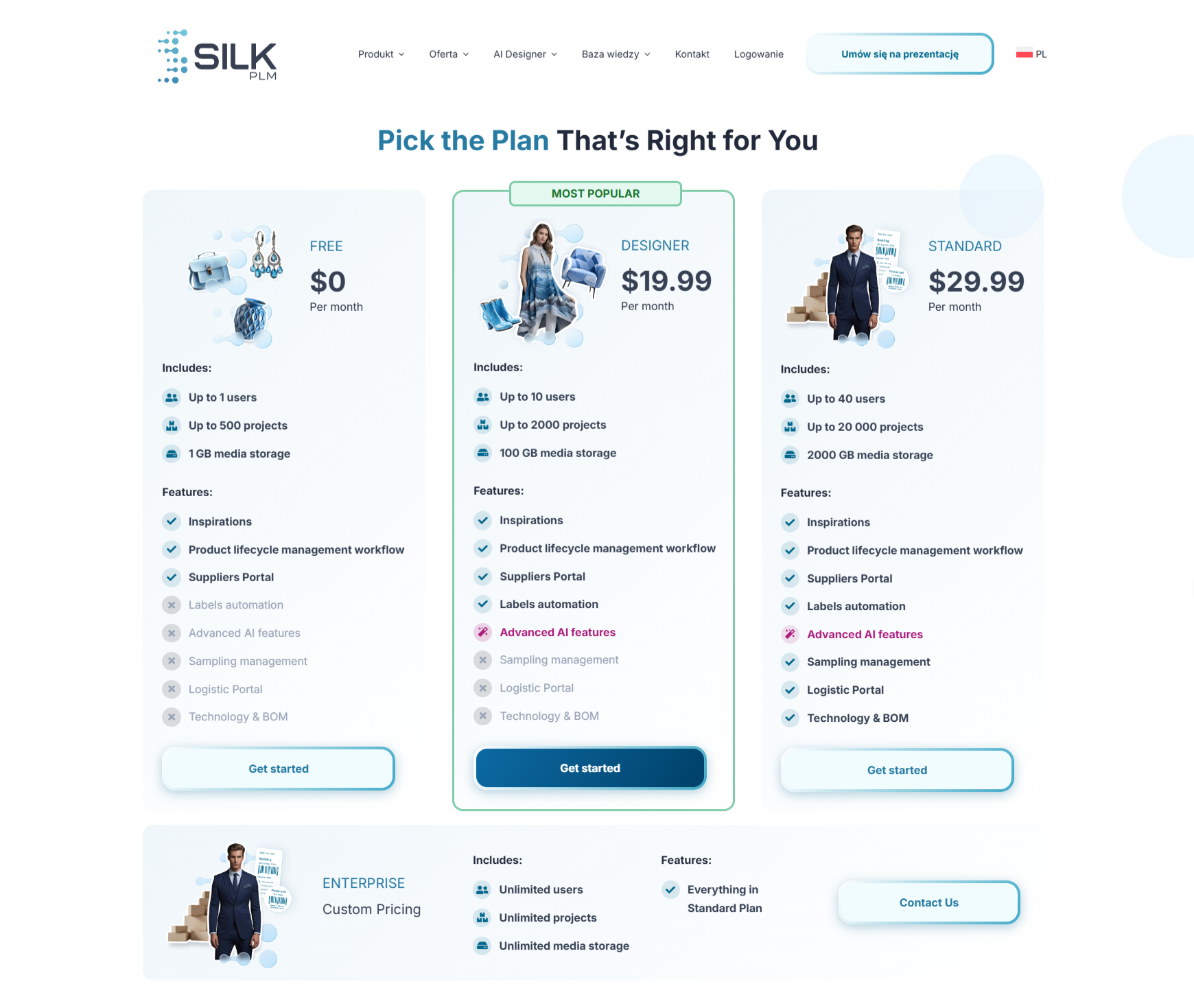
I structured the path from plan selection to account creation, payment and first product guidance.
I designed the key screens and UI elements needed to make the flow clear and visually consistent.
I reviewed onboarding patterns from other SaaS products to understand how they explain trials, pricing and next steps.
I worked on messages and interface elements that made the trial, payment and cancellation rules easier to understand.
I mapped the onboarding journey from the first interaction with free AI tools to the first guided actions inside SilkPLM.
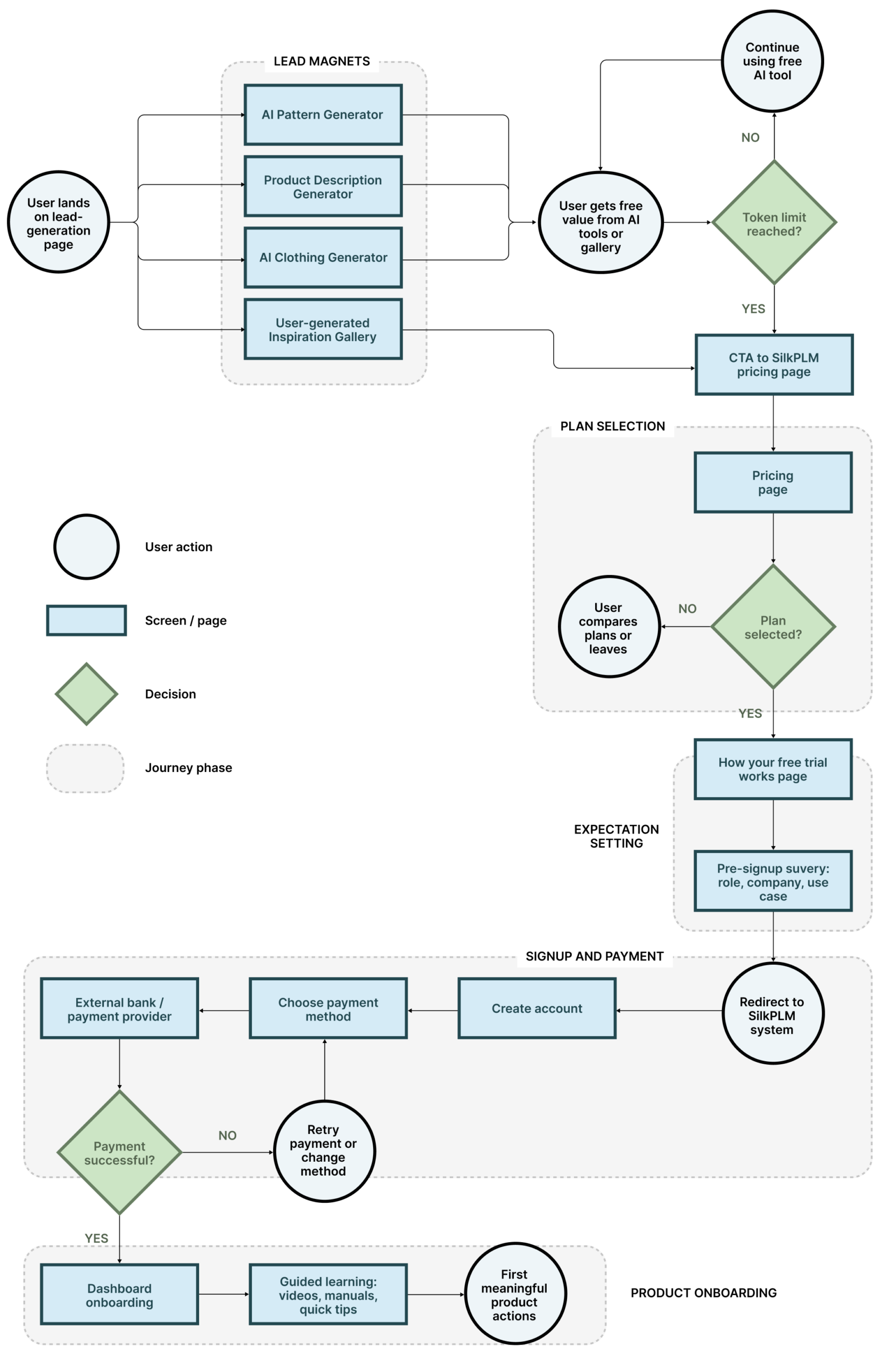
Based on the user flow, I focused on reducing uncertainty before signup, showing product value early and guiding new users toward their first meaningful actions inside SilkPLM.
Users could interact with AI tools and inspiration content before creating an account, which lowered the entry barrier.
The pricing CTA appeared after users reached the free token limit, when they already understood the value of the product.
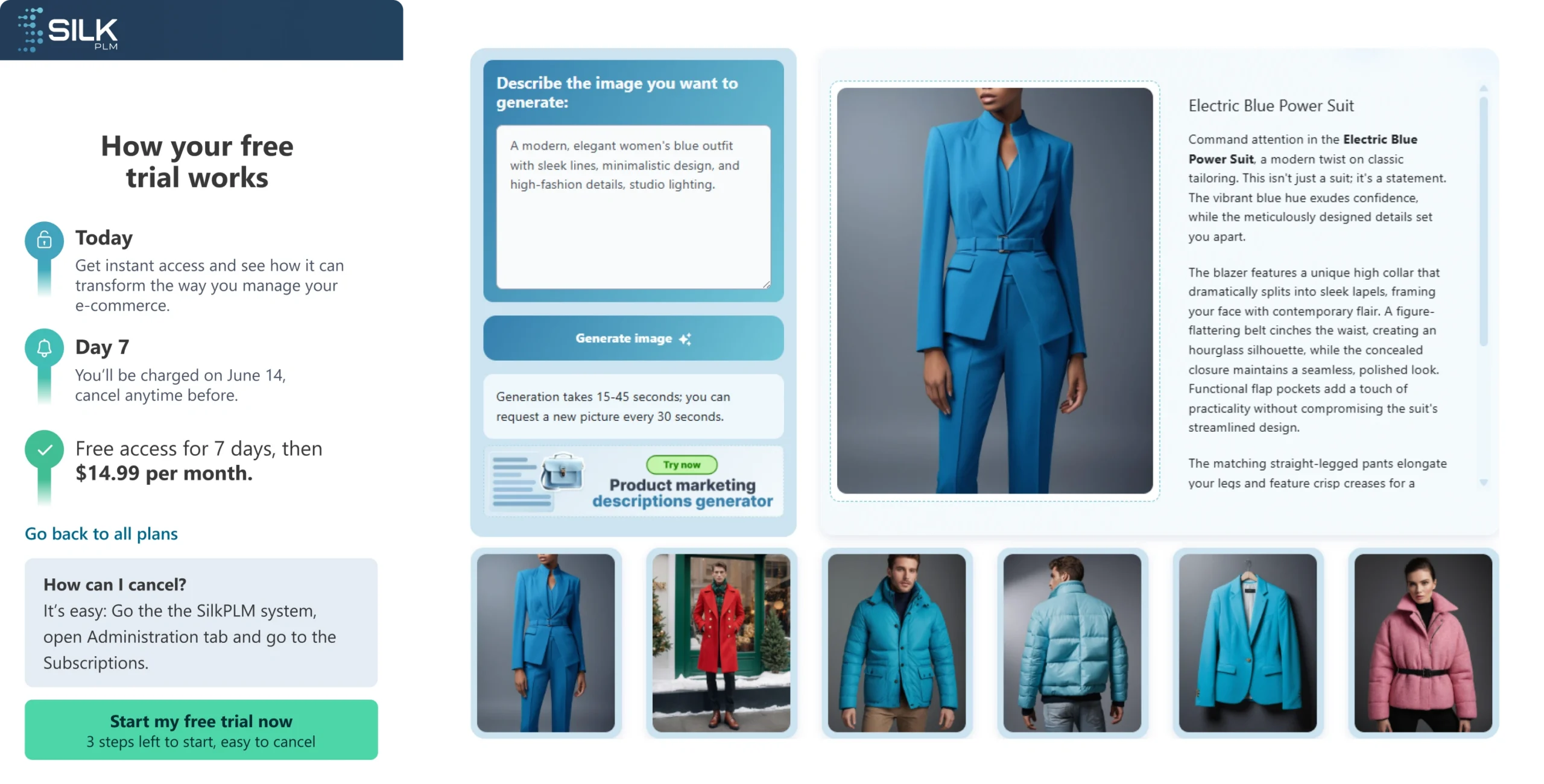
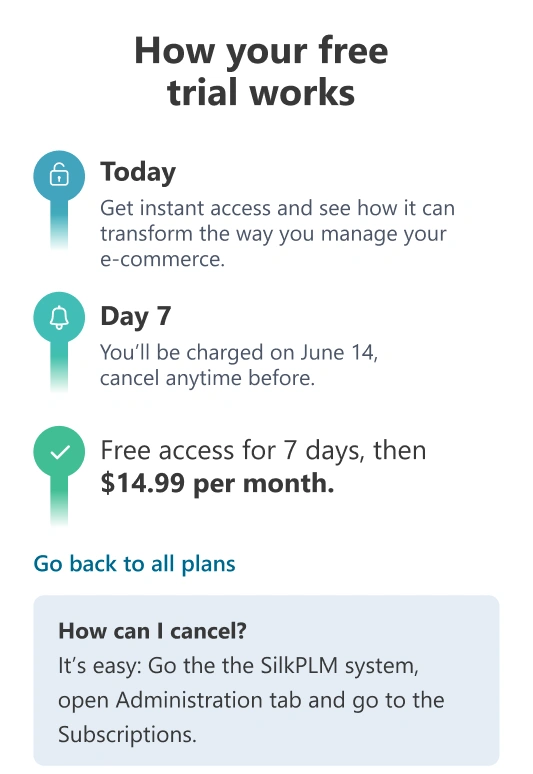
Before signup and payment, users saw how the free trial worked, helping reduce uncertainty and build trust.
A short pre-signup survey collected role, company and use-case information before the user entered the product.
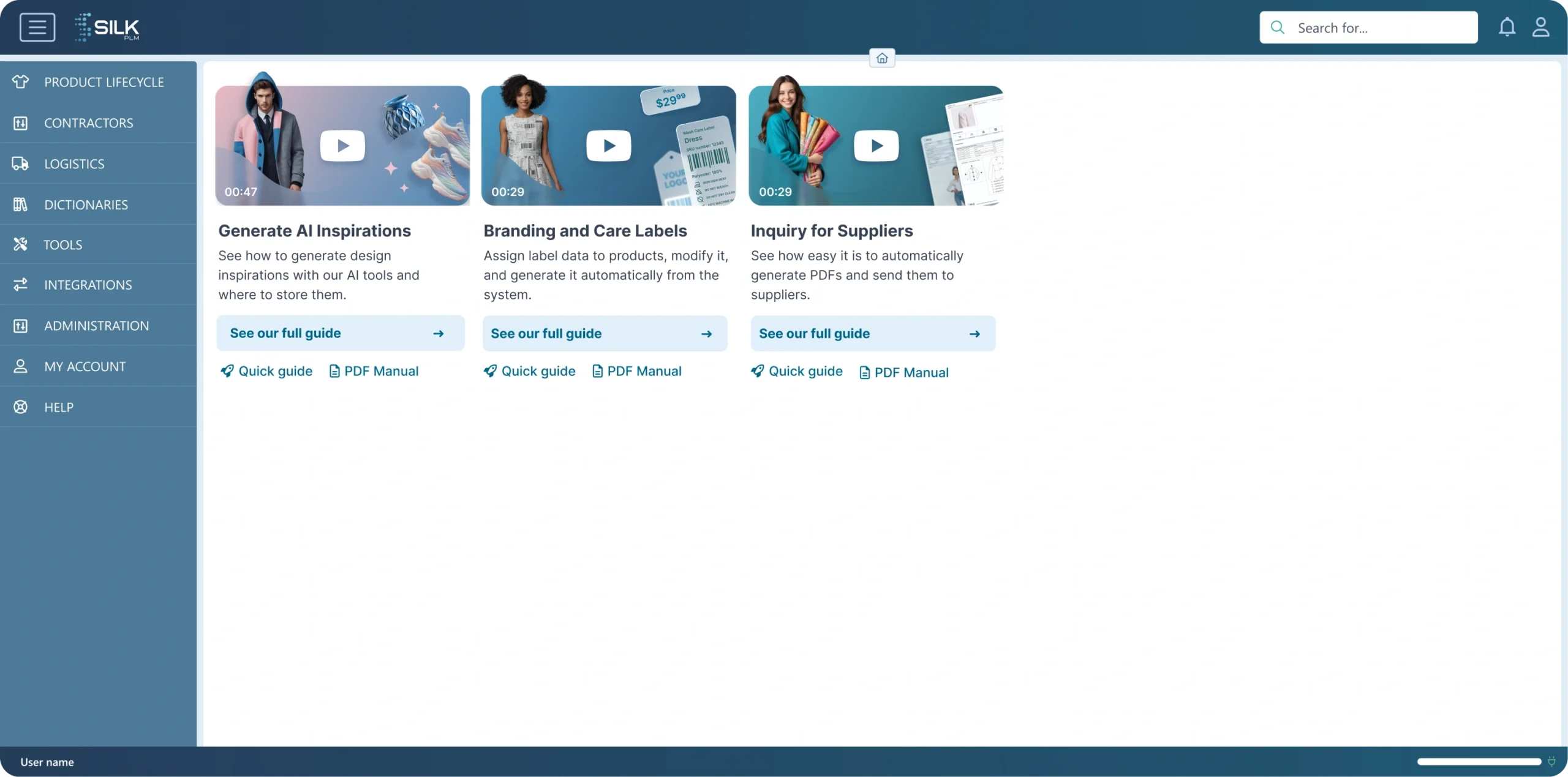
After payment, users landed on dashboard onboarding with guides, videos and manuals to help them start using key features.
This part of the project shows how I connected acquisition, conversion, signup and product onboarding into one coherent SaaS experience.
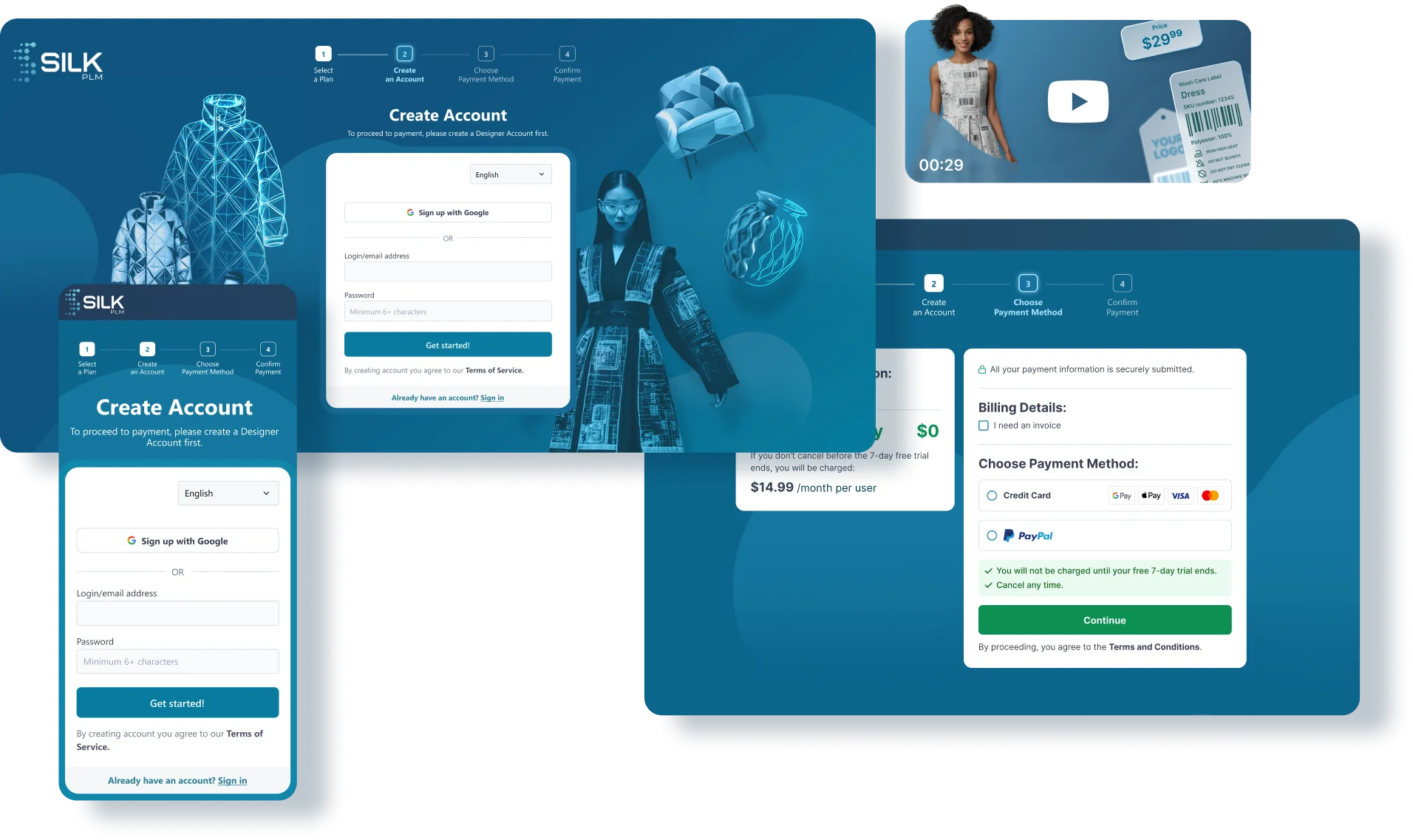
After defining the onboarding flow, I designed key interface screens that helped users understand the trial, create an account, complete payment and start using SilkPLM with guidance inside the dashboard.
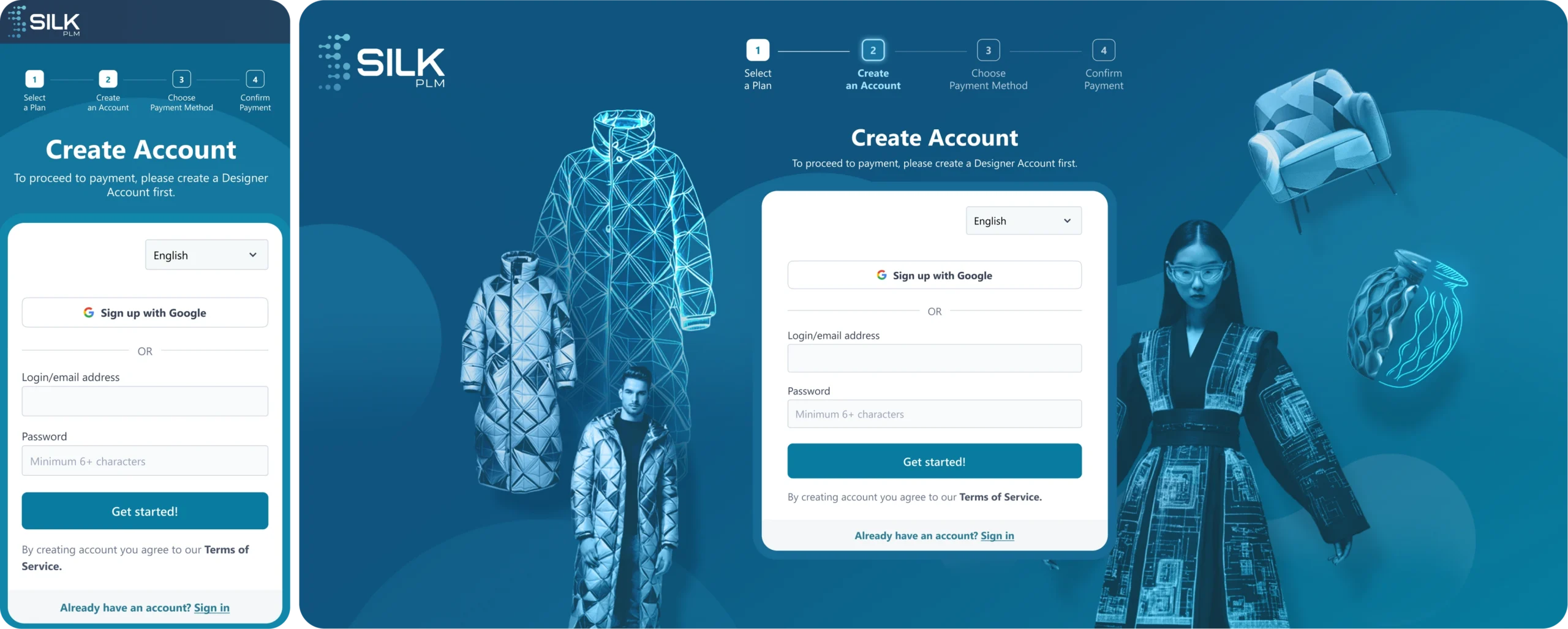
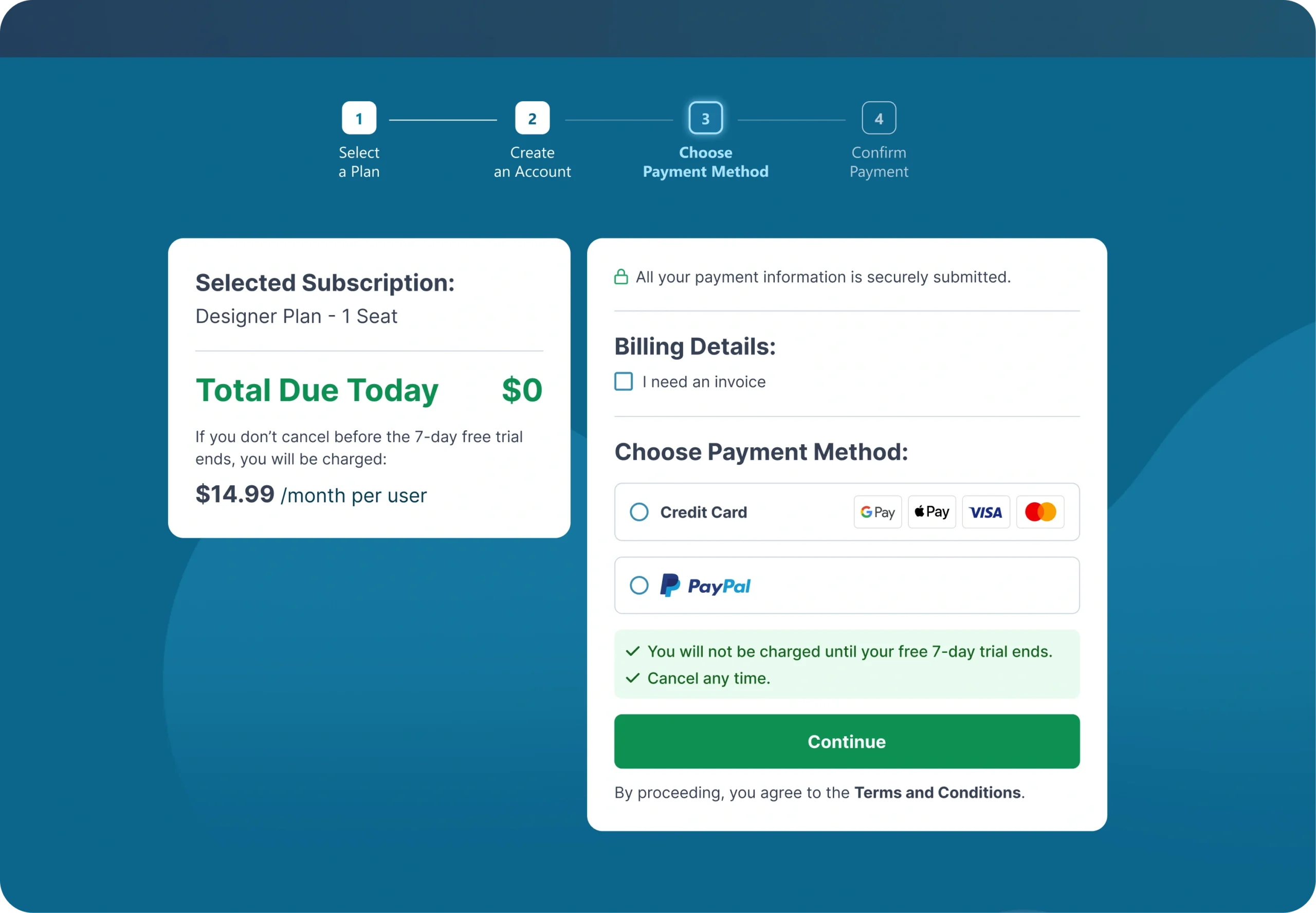
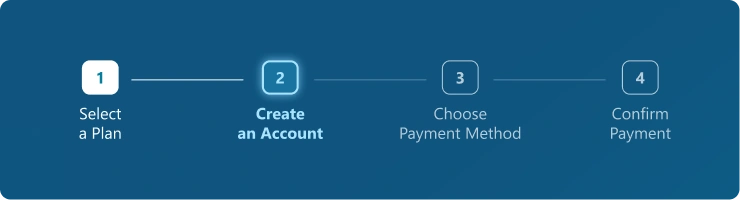
A clear step indicator helped users understand where they were in the signup and payment process, and what was still ahead.
Trial-related information explained what happens before and after signup, helping users understand the payment and cancellation rules.
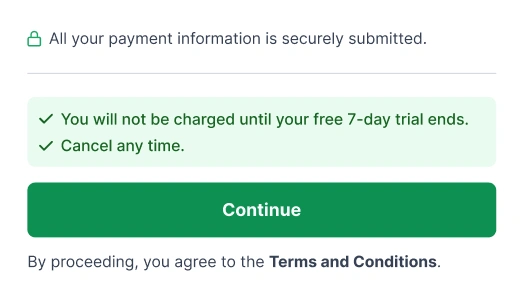
Security messages, recognizable payment methods and clear CTA hierarchy helped reduce hesitation during the payment step.
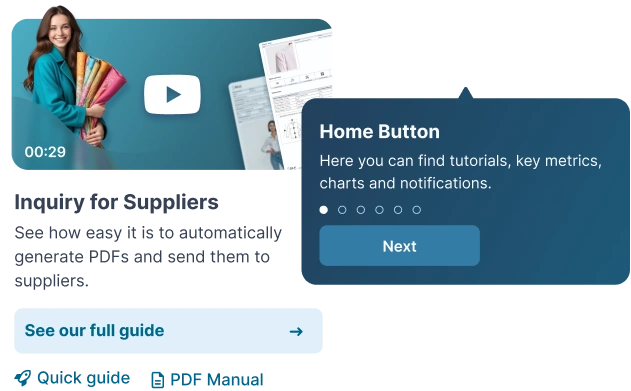
After account creation, users were guided with dashboard cards, videos and manuals instead of landing in the product without context.
I used analytics and behavior tracking tools to understand how users entered the onboarding journey, where they could drop off and which parts of the flow needed clearer communication.
I used funnel tracking to follow key onboarding steps and monitor how users moved from lead-generation pages toward signup and product onboarding.
I used Google Analytics to understand traffic sources, landing page performance and which acquisition pages brought users into the SilkPLM journey.
I reviewed recordings and heatmaps to check how users interacted with important onboarding screens, especially trial information, payment reassurance and dashboard guidance.
The behavioral analysis helped me focus on three areas: making trial rules easier to understand, adding trust cues around payment and creating dashboard guidance for users who needed support after account creation.
The project created a more structured path from lead-generation pages to signup, payment and first product guidance inside SilkPLM.
AI generators brought regular daily traffic and helped users experience value before entering the core product.
The flow connected free AI tools, trial information and product onboarding, helping users move from initial interest toward a deeper SilkPLM experience.
Tutorials and manuals gave users a first layer of guidance before they needed direct support from the team.
The structure could be reused and expanded for future onboarding steps, product areas and educational content.
A guided onboarding path can make a complex SaaS product easier to understand, especially when users enter through free tools instead of the core product.
Combining video, text and quick tips supports different learning preferences and gives users more than one way to understand the product.
In a resource-constrained startup environment, fast iteration and clear onboarding priorities can be more valuable than waiting for a perfect end-to-end solution.
If I continued working on this flow, I would focus on reducing friction before product adoption, strengthening trust across key conversion moments and giving users more time to understand a complex PLM system.
The next iteration would move the flow closer to a value-first onboarding model: users would experience the product before being asked to choose a plan or complete payment.
The onboarding survey would still support lightweight user research by helping the team understand who users are, what they want to achieve and which product areas matter most to them.
Due to the startup environment and limited project resources, formal usability testing was not part of the initial scope. As a next step, I would validate the most important onboarding steps with users and compare their feedback with behavioral data from Mixpanel and Hotjar.
I would move the survey after signup to reduce friction before account creation, while keeping its role as a lightweight research method for understanding user roles, goals and product needs.
I would move plan selection and payment closer to the end of the free trial, allowing users to experience product value before making a purchase decision.
Because SilkPLM is a complex SaaS/PLM system, I would consider extending the free trial to give users more time to learn the product, complete onboarding and reach meaningful value.
I would analyse the full journey from free AI tools to signup, trial, product onboarding and payment to identify moments where users might lose trust, feel surprised or hesitate before continuing.